


Food & Cooking
Cooking at the workcamp
Let's now focus on how to make cooking management more inclusive, starting with the cooking team and then moving on to the cooking in general.
Chef and the team
Cooking process
Chef and the team
The cooking team and its chef will depend on task division. Task distribution is crucial from the beginning of the project. As a camp leader, you'll need to learn to delegate. Managing the kitchen is part of it. It is important not to take on too many responsibilities, as you will have many things to think about and manage during the camp.
Task division can take various forms. In an unstructured way, you can let participants choose what they prefer to do. Or, in a structured way, you can operate with a lottery system where each participant draws five tasks to trade with others.
Once task division is done, the cooking team will decide who will be the chef. The term "chef" is used here as a leader who will make decisions rather than someone who will be above everyone else. In most cases, there is not an explicit election of the "chef," but it's implicit. For example, the chef might be the one with a recipe idea or the one who feels most comfortable leading a team.
The responsibility of cooking might be daunting for some; don't hesitate to make participants feel comfortable and take the pressure off. The goal of the cooking team isn't to produce a 5-star meal but also to learn. Sometimes, people are cooking for the first time, and it takes all their courage to dive in. Be encouraging! Perfection doesn't exist in any case.
Task division can take various forms. In an unstructured way, you can let participants choose what they prefer to do. Or, in a structured way, you can operate with a lottery system where each participant draws five tasks to trade with others.
Once task division is done, the cooking team will decide who will be the chef. The term "chef" is used here as a leader who will make decisions rather than someone who will be above everyone else. In most cases, there is not an explicit election of the "chef," but it's implicit. For example, the chef might be the one with a recipe idea or the one who feels most comfortable leading a team.
The responsibility of cooking might be daunting for some; don't hesitate to make participants feel comfortable and take the pressure off. The goal of the cooking team isn't to produce a 5-star meal but also to learn. Sometimes, people are cooking for the first time, and it takes all their courage to dive in. Be encouraging! Perfection doesn't exist in any case.
Cooking process
Regarding the cooking itself, it's essential to consider all dietary needs: vegetarian, vegan, gluten-free, lactose-free, pork-free, etc. As it is explained in the Food Waste section, it's very practical to get in touch with the volunteer group before the project begins to understand their different dietary needs. This will help you manage the different meals throughout the project duration.
One of the golden rules is not to impose but to empower the group regarding each participant's dietary needs. The world is diverse, just like cooking. Involving volunteers in creating varied and balanced meals also means empowering them regarding their meat consumption and emphasizing environmental values - you do not forget about keeping an eye of the consumption of tap water spent during cookin, right? :).
One of the golden rules is not to impose but to empower the group regarding each participant's dietary needs. The world is diverse, just like cooking. Involving volunteers in creating varied and balanced meals also means empowering them regarding their meat consumption and emphasizing environmental values - you do not forget about keeping an eye of the consumption of tap water spent during cookin, right? :).
Shopping agenda
There are no exact rules, that would make food shopping totally easy. But we can share some simple steps that will make it less stressful and a bit more sustainable.
1. Shop only for what you need.
Always think not of ingredients but of meals themselves! You can check out our recipes for inspiration (link here). A list of meals will make it easier for you in the shop. First time going you can buy all the essentials in bigger quantities, they will be used a lot and do not expire fast - rice, pasta, oatmeal, cereal, cans with corn, beans, tomato sauce, spices, salt, etc. - but only first time.
2. Always bring your reusable bags - at least some.
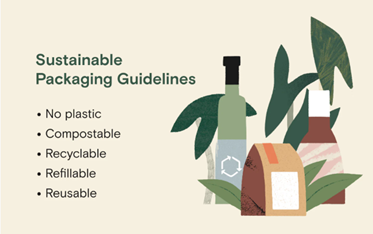
Choose products in more eco packaging (we know it’s hard).
Source: https://hivebrands.com/blogs/news/sustainable-grocery-shopping
3. Take into consideration the dietary requirements of the group.
Eg.: It is always easier to cook Lasagne without Beshamel if someone does not tolerate milk than cooking 2 different Lasagnes, isn’t it?
4. Choose Sustainable Groceries.
Organic, fair-trade, seasonal, local.
5. Analyse and reevaluate.
Going to the shop next time you should have a clear idea, of what you still have, how to use it, and what products your participants enjoy more/less.
Eg.: You had 2 big plain Joghurts and vanilla flavored. After 3 days you can see in the fridge 1,5 vanilla yogurts only, others are gone. What should you get next time?
6. Try out new and plant-based!
Why? See in Sustainable cooking? chapter
Fruits and vegetables
High fiber carbohydrates
Healthy protein foods
Aaaaand extra fun stuff!
1. Shop only for what you need.
Always think not of ingredients but of meals themselves! You can check out our recipes for inspiration (link here). A list of meals will make it easier for you in the shop. First time going you can buy all the essentials in bigger quantities, they will be used a lot and do not expire fast - rice, pasta, oatmeal, cereal, cans with corn, beans, tomato sauce, spices, salt, etc. - but only first time.
2. Always bring your reusable bags - at least some.
Choose products in more eco packaging (we know it’s hard).
Source: https://hivebrands.com/blogs/news/sustainable-grocery-shopping
3. Take into consideration the dietary requirements of the group.
Eg.: It is always easier to cook Lasagne without Beshamel if someone does not tolerate milk than cooking 2 different Lasagnes, isn’t it?
4. Choose Sustainable Groceries.
Organic, fair-trade, seasonal, local.
5. Analyse and reevaluate.
Going to the shop next time you should have a clear idea, of what you still have, how to use it, and what products your participants enjoy more/less.
Eg.: You had 2 big plain Joghurts and vanilla flavored. After 3 days you can see in the fridge 1,5 vanilla yogurts only, others are gone. What should you get next time?
6. Try out new and plant-based!
Why? See in Sustainable cooking? chapter
And a very simple check-list, what should we eat:
Fruits and vegetables
High fiber carbohydrates
Healthy protein foods
Aaaaand extra fun stuff!
How to use leftovers
Depending on how you manage your shopping, cooking, and volunteer appetites, there is a good chance you will have some food left over. With that in mind, let's take a look at the solutions available to you. First, we will look at the possible actions you can take during the camp, and then we will see how you can manage leftovers after the camp has ended.
During the camp
After the camp
During the camp
Prevention
Although this point has already been addressed, just as it's important to reduce food waste, let's also avoid leftovers. This can be achieved by a more thoughtful and anticipatory approach to consumption.
For example, one of the most important steps you can take before going grocery shopping is to look in the refrigerator to see what you have left. Don't make assumptions about what you have in stock, just take 5 minutes to open the cupboards and take a quick inventory. This will help you avoid buying goods you already have.
Flexibility
Flexible is the watchword for food waste, as well as for leftovers. Change anything that can be changed if it leads to a better outcome. Let's say you've planned all your recipes and meal ideas for the week; if, one day, you find yourself with too many leftovers, simply reheat them instead of thinking of a new dish. This also applies to uncooked ingredients. Be creative and open to exploring new paths. Here are a few ideas to inspire you:
- Excess vegetables can be transformed into soup, spaghetti sauce, and ratatouille.
- Slightly stale bread can be turned into croutons or French toast.
- Leftover cooked rice can be transformed into fried rice or rice pudding.
- Unattractive fruits can be turned into a fruit salad.
- Extra pasta can become a cold pasta salad for the next day
Help
To help you to manage leftovers and make use of specific ingredients, you can turn to an application. For instance, there is an app called SuperCook that helps you prepare meals based on what ingredients you have available. It allows you to discover recipes according to your available ingredients, and you can also choose the type of meal you want to make, such as soup, salad, or casseroles.
And most importantly, consult the volunteers! You're not in this alone; the camp leader is not in charge of everything. Responsibilities are shared, and you don't have to oversee all the cooking. If a designated cooking team is in charge, talk to them. Find out what their plans are, and make them aware of the problem of leftovers.
Although this point has already been addressed, just as it's important to reduce food waste, let's also avoid leftovers. This can be achieved by a more thoughtful and anticipatory approach to consumption.
For example, one of the most important steps you can take before going grocery shopping is to look in the refrigerator to see what you have left. Don't make assumptions about what you have in stock, just take 5 minutes to open the cupboards and take a quick inventory. This will help you avoid buying goods you already have.
Flexibility
Flexible is the watchword for food waste, as well as for leftovers. Change anything that can be changed if it leads to a better outcome. Let's say you've planned all your recipes and meal ideas for the week; if, one day, you find yourself with too many leftovers, simply reheat them instead of thinking of a new dish. This also applies to uncooked ingredients. Be creative and open to exploring new paths. Here are a few ideas to inspire you:
- Excess vegetables can be transformed into soup, spaghetti sauce, and ratatouille.
- Slightly stale bread can be turned into croutons or French toast.
- Leftover cooked rice can be transformed into fried rice or rice pudding.
- Unattractive fruits can be turned into a fruit salad.
- Extra pasta can become a cold pasta salad for the next day
Help
To help you to manage leftovers and make use of specific ingredients, you can turn to an application. For instance, there is an app called SuperCook that helps you prepare meals based on what ingredients you have available. It allows you to discover recipes according to your available ingredients, and you can also choose the type of meal you want to make, such as soup, salad, or casseroles.
And most importantly, consult the volunteers! You're not in this alone; the camp leader is not in charge of everything. Responsibilities are shared, and you don't have to oversee all the cooking. If a designated cooking team is in charge, talk to them. Find out what their plans are, and make them aware of the problem of leftovers.
After the camp
After the camp is over, it is time to sort through the food. As we discussed in the Food waste section, you already have solutions for items that are no longer edible. Let's now focus on the food that is still good and provide you with some ideas.
One of the initial options available is to redistribute the food among the participants. As they head home, they may be hungry during the journey. You can fairly distribute what might be of interest to those who are willing.
You can also donate the remaining non-perishable food to organizations that collect food, such as the Red Cross or local food banks like Les Restos du Cœur in France, for example. Another consideration is reaching out to long-term volunteers in the city where your camp is held and inquire with the hosting organization.
One of the initial options available is to redistribute the food among the participants. As they head home, they may be hungry during the journey. You can fairly distribute what might be of interest to those who are willing.
You can also donate the remaining non-perishable food to organizations that collect food, such as the Red Cross or local food banks like Les Restos du Cœur in France, for example. Another consideration is reaching out to long-term volunteers in the city where your camp is held and inquire with the hosting organization.
Food waste
Food waste is a sensitive issue when cooking for a large number of people at once. In this section, we will discuss how to reduce food waste and manage it effectively.
How to reduce?
How to manage?
How to reduce?
The best way to fight food waste is prevention. One of the factors directly related to food waste is grocery management. This depends on how often you do it, the budget you allocate to it, and the people responsible for the task.
Frequency
The frequency of grocery shopping depends on the location of your camp and the time you plan to dedicate to it. If your camp is in a remote area with few nearby stores, you will need to plan ahead for several days of shopping. This also applies when you have limited time allocated for grocery shopping during your camp.
When shopping in advance, there is a tendency to buy too much and products that will not be used. This is understandable, as we don't want our dear volunteers to go hungry. Therefore, it is crucial to be mindful of what you will consume and plan accordingly.
Planning ahead means being prepared and efficient. To be able to shop well and have enough (but not too much) food for several days, it is essential to have recipe ideas, knowledge of quantities, and awareness of specific dietary needs.
It will be important to stay connected with your group of volunteers to gather certain information. One piece of advice is to reach out to your volunteers before the camp, for example via WhatsApp, and ask about their dietary preferences. You can collect responses in the form of a Google Form questionnaire. This way you can learn more about what they like to eat for different meals and avoid buying products that no one will consume.
you allocate to it, and the people responsible for the task.
Budget
The grocery management also depends on your budget. It is very tempting to buy in bulk, especially during promotions. The key is to find a balance between overconsumption and the money you have. Would it be more cost-effective to buy 5 salads at €5 each or 7 salads at €4 each, knowing that the planned recipe requires only 5? It will be up to you to assess whether you can or cannot use the purchased food and adapt based on what meals you have already planned.
you allocate to it, and the people responsible for the task.
Grocery shopping team
Depending on your task distribution, you may delegate the responsibility of grocery shopping to volunteers. If that's the case, it's important to consider that a foreign volunteer may not be familiar with all the brands and products in the store in the country they are in.
Those not in charge may also not be familiar with the products. Feel free to communicate with them about the right packaging and labels to avoid picking up a product that won't be used. You can also consider forming a grocery shopping team with someone who speaks the language of the country and foreign volunteers.
If a person couldn't find the right product or it was no longer available, making it impossible to follow the recipe?
Be flexible! Transform the basic recipe into something else.
Frequency
The frequency of grocery shopping depends on the location of your camp and the time you plan to dedicate to it. If your camp is in a remote area with few nearby stores, you will need to plan ahead for several days of shopping. This also applies when you have limited time allocated for grocery shopping during your camp.
When shopping in advance, there is a tendency to buy too much and products that will not be used. This is understandable, as we don't want our dear volunteers to go hungry. Therefore, it is crucial to be mindful of what you will consume and plan accordingly.
Planning ahead means being prepared and efficient. To be able to shop well and have enough (but not too much) food for several days, it is essential to have recipe ideas, knowledge of quantities, and awareness of specific dietary needs.
It will be important to stay connected with your group of volunteers to gather certain information. One piece of advice is to reach out to your volunteers before the camp, for example via WhatsApp, and ask about their dietary preferences. You can collect responses in the form of a Google Form questionnaire. This way you can learn more about what they like to eat for different meals and avoid buying products that no one will consume.
you allocate to it, and the people responsible for the task.
Budget
The grocery management also depends on your budget. It is very tempting to buy in bulk, especially during promotions. The key is to find a balance between overconsumption and the money you have. Would it be more cost-effective to buy 5 salads at €5 each or 7 salads at €4 each, knowing that the planned recipe requires only 5? It will be up to you to assess whether you can or cannot use the purchased food and adapt based on what meals you have already planned.
you allocate to it, and the people responsible for the task.
Grocery shopping team
Depending on your task distribution, you may delegate the responsibility of grocery shopping to volunteers. If that's the case, it's important to consider that a foreign volunteer may not be familiar with all the brands and products in the store in the country they are in.
Those not in charge may also not be familiar with the products. Feel free to communicate with them about the right packaging and labels to avoid picking up a product that won't be used. You can also consider forming a grocery shopping team with someone who speaks the language of the country and foreign volunteers.
If a person couldn't find the right product or it was no longer available, making it impossible to follow the recipe?
Be flexible! Transform the basic recipe into something else.
How to manage?
Congratulations on doing your best to minimize food waste! Despite your efforts, it's inevitable that food waste will still be present. During the camp, you will likely face the need to dispose of food leftovers or kitchen waste resulting from meal preparation.
In this context, let's focus on managing this waste and how to dispose of it properly. Where should you throw it, and what are the best practices to minimize its impact on the environment?
It's important to note that each country has its own way of sorting waste. Some countries have dedicated bins for organic waste, while others may not emphasize this practice and opt for a single bin.
The easiest way to know is to check directly with your host organization to learn about the specifics of waste sorting in the country where you are doing your workcamp. Should you buy specific bags? Is there a designated area for waste disposal? …are some questions you might ask.
Furthermore, if you wish to directly utilize your organic waste, an interesting alternative is to create compost that can be used in a community garden or permaculture site.
See more details about permaculture also here.
You can also take the initiative to contact farms to see if they would be interested in your waste, for example, to feed their animals such as pigs, chickens, etc.
In this context, let's focus on managing this waste and how to dispose of it properly. Where should you throw it, and what are the best practices to minimize its impact on the environment?
It's important to note that each country has its own way of sorting waste. Some countries have dedicated bins for organic waste, while others may not emphasize this practice and opt for a single bin.
The easiest way to know is to check directly with your host organization to learn about the specifics of waste sorting in the country where you are doing your workcamp. Should you buy specific bags? Is there a designated area for waste disposal? …are some questions you might ask.
Furthermore, if you wish to directly utilize your organic waste, an interesting alternative is to create compost that can be used in a community garden or permaculture site.
See more details about permaculture also here.
You can also take the initiative to contact farms to see if they would be interested in your waste, for example, to feed their animals such as pigs, chickens, etc.
Sustainable cooking
Sustainable cooking is a way of preparing a meal in a way it benefits one's health, environment and, ultimately, the whole planet.
Why should we cook more sustainably?
How can you make an impact as an individual?
Why should we cook more sustainably?
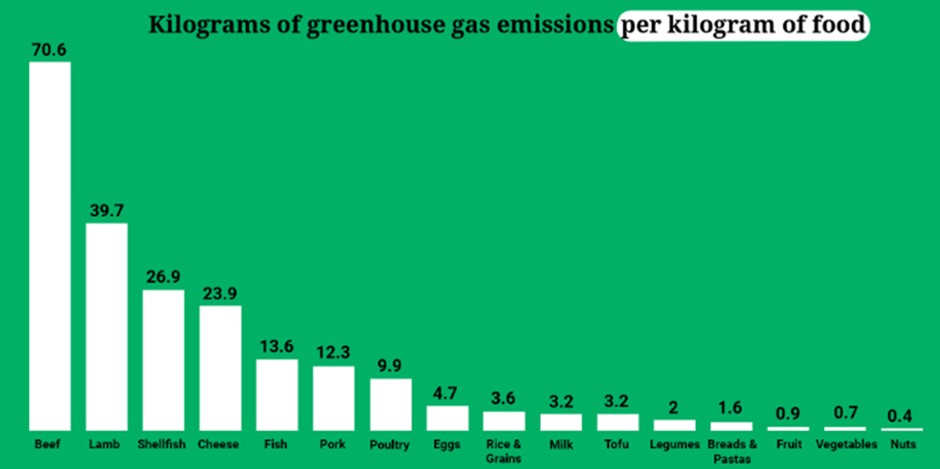
One quarter – 26% – of gas emissions is caused by food (Richie, 2019). This is mainly due to agriculture (e.g. use of fertilizers and fuel) and land use (e.g. deforestation). Other causes are the production of packaging, food waste, and refrigeration and transport. (United Nations) & (United Nations)
Source: (United Nations)
Compared to animal-based food, plant-based food needs less water, land, and energy to grow, and thus is more sustainable. Moreover, cattle produce lots of methane.
Source: (United Nations)
Compared to animal-based food, plant-based food needs less water, land, and energy to grow, and thus is more sustainable. Moreover, cattle produce lots of methane.
How can you make an impact as an individual?
Change your shopping habits (link to the article Sustainable food shopping)
„Switching to a plant-based diet can reduce an individual’s annual carbon footprint by up to 2.1 tons with a vegan diet or up to 1.5 tons for vegetarians. “ (United Nations)
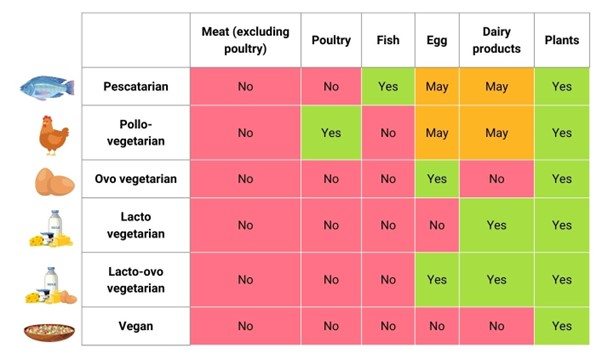
Vegetarian? Okay, but which diets?
Sources: (Harvard Health Publishing, 2020) and (Better Health Channel)
What should I do if I wanted to try one of the diets above?
This example starts with the base – meat, but all steps would work for eggs, fish, dairy, etc.
No meat at once might be tough if you are used to it – so start with red meat (and pork), you still have turkey/chicken/seafood/etc. as an option, and wait until you are ready to avoid this as well.
3. Try out new recipes, find vegetarian versions of your favorite meals, and be very adventurous!
4. Do not forget to get all the necessary nutrients ?
Useful links:
Healthy eating as a vegetarian
Healthy eating as a vegan
„Switching to a plant-based diet can reduce an individual’s annual carbon footprint by up to 2.1 tons with a vegan diet or up to 1.5 tons for vegetarians. “ (United Nations)
Vegetarian? Okay, but which diets?
Sources: (Harvard Health Publishing, 2020) and (Better Health Channel)
What should I do if I wanted to try one of the diets above?
This example starts with the base – meat, but all steps would work for eggs, fish, dairy, etc.
- At first, don’t try to “never eat meat again”. Don’t be hard on yourself if you can’t make it once and forever!
No meat at once might be tough if you are used to it – so start with red meat (and pork), you still have turkey/chicken/seafood/etc. as an option, and wait until you are ready to avoid this as well.
3. Try out new recipes, find vegetarian versions of your favorite meals, and be very adventurous!
4. Do not forget to get all the necessary nutrients ?
Useful links:
Healthy eating as a vegetarian
Healthy eating as a vegan
CONTACT
Partners